Wednesday, May 1, 2013

Bisy Backson


Lately I feel like I’m always busy. I really shouldn’t complain because my time is mostly filled with things and people I love (alright, I’m not quite ready to drop the L bomb on my new job, but it seems fine so far). I do find that our society seems to respect and understand “busy” far more than it respects free time. In the last 10-ish months since I got back to the U.S., people have frequently asked me what I’m up to with my time. I would always feel slightly defensive when explaining that I’m “only” in school full time. No, I didn’t have a job. I simply spent around 40 hours a week (actually probably a lot more than that) going to classes and studying. I also spent a lot of time with family and friends, working out, reading, and doing whatever else struck my fancy. For some reason, I was always defensive about this. So what’s so wrong about valuing time that is not spent doing something “productive”?

One thing that I really learned to love about Ndjuka culture in Suriname was their view of the word ‘lazy’. When I first arrived in Suriname, villagers would frequently ask me if I was being lazy. I always got defensive about this and would explain that whatever I was doing was somehow productive. Our language and culture have a very negative connotation with the word ‘lazy’. Finally, I realized that my villagers were not using this word in a negative way at all, and it became my best friend. When a villager would stop by and ask me why she hadn’t seen me yet today, my response would be, “I’m so lazy today”. No questions asked, very respectable answer. Being lazy was a thing to be respected and valued.

It was very common in the heat of the afternoon to simply sit under a tree and just take in the breeze for an hour or so. Visiting with neighbors didn’t always mean talking or doing something, sometimes it just meant sitting in each others’ presence. I had an older couple who lived not too far from me who I always loved visiting. They always seemed to take turns with who would chat with me, and who would nap away our visit. When it was Baa Lene’s (the man) turn to chat with me, he would fill me in on the village and the world’s news. He had a radio and he listened to the news in Dutch. This is how I learned about many of the world’s big events, like the death of Bin Laden. When it was Saa Poli’s (the woman) turn to chat with me, she would pick my brain about life in the U.S. and generally just joke around with me. They were great people. Sometimes all three of us would just kind of nod off during my visit. Wow, this has gone on a tangent.

To get back to the point, I don’t know if it’s the way that our society is set up or if it’s simply our cultural values that dictates our use and views of time. On the one hand, I will admit that it is very difficult for people to get by financially without working their buts off. On the other hand, even when we are busy with keeping our families or just ourselves afloat, we always seem to pack in more obligations. Are we uncomfortable with just being?

In the Tao of Pooh, there is a part of the book that talks about the Bisy Backson. Christopher Robin leaves a note on his door that says, “Gon out Backson Bisy Backson, CR”. A bisy backson is somehow who is always busy busy busy, even when they are at rest they are busy. Sometimes I think this can be me. All this criticism includes myself, who can easily fall into this trap. I would like to channel the opposite of the Bisy Backson, Pooh. He just is. Even when he is at work, he is far from busy.

Saturday, April 20, 2013

My fellow PCVs

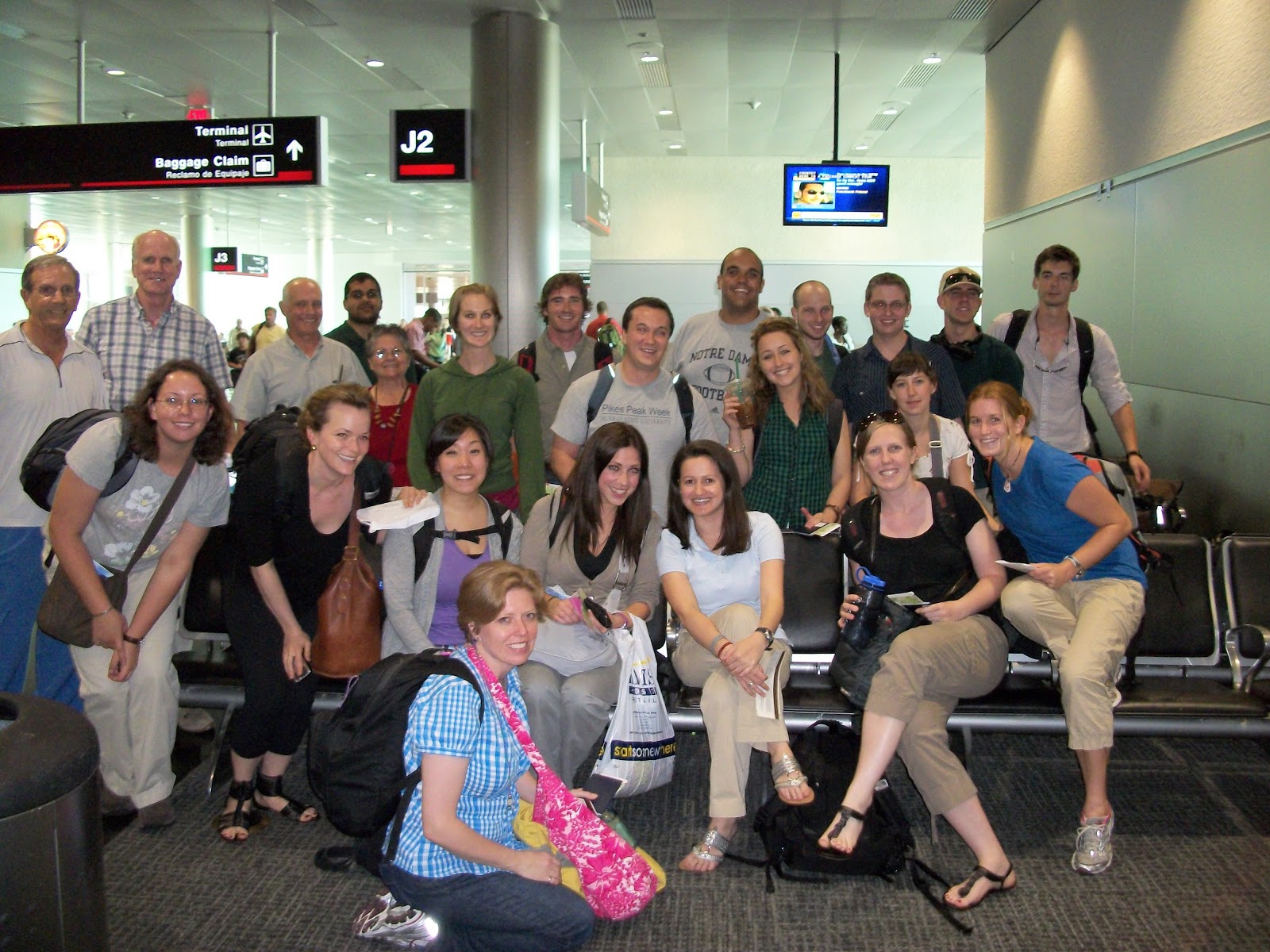
 I find that it’s been really difficult to keep in good contact with my fellow volunteers since being home. I haven’t quite been able to put my finger on why this is. These people were everything to me for two years. They were my best friends, they were my family, they were my vital support system. There is no way I would have made it through those two years without them. I became so close with some of these people and it was amazing.

I feel that especially with volunteers from my own group, SUR16, I got to see these people at their best and their worst. And they got to see the same of me. I think it’s very rare to see and know so much about someone in such a short amount of time. As an adult, I think it’s harder to make those kinds of connections with people. Everyone has there own thing going on and their own lives to live. They have jobs, school, relationships, etc, and it’s just difficult to really set aside the time and effort to form extremely close friendships. In Peace Corps, you are thrown into this crazy adventure with (in my case) 23 other people. You go through things together that no one else will ever understand. There are parts of me that no one else but a SUR16 will ever truly understand. I miss these people. I miss that connection.

The Peace Corps Volunteers I met were some of the most amazing people I have ever known. I think it is common to view PCVs as these humanitarian saints, and this is far from the truth. PCVs as flawed as anyone else, but we all have some basic things in common. We all saw a challenging situation, and we ran towards it instead of hiding from it. Every PCV has a different reason for joining the Peace Corps, but whether it’s the “selfish” reason of pushing yourself to the limit and growing as a human (that’s selfish?), helping those who are less fortunate, going on an adventure, etc., it’s always a good reason. There is a certain way that most PCVs look at life, and I found it extremely refreshing and wonderful.

So, to wrap this up, I miss my fellow SUR15s, the few SUR14s I got to know, SUR16s and SUR17s. I miss them a lot. I think I’m still waiting for the day where I have absolutely nothing to do but talk on the phone with one of my volunteers. The U.S. is rather busy. In the 10 months I’ve been back in the States, this day has not yet come. It may take awhile to figure out how we communicate in this new environment of ours, but we will. And in the meantime, I hope they all know that they are always in my thoughts and that I miss them.

Thursday, April 18, 2013

Maiamba


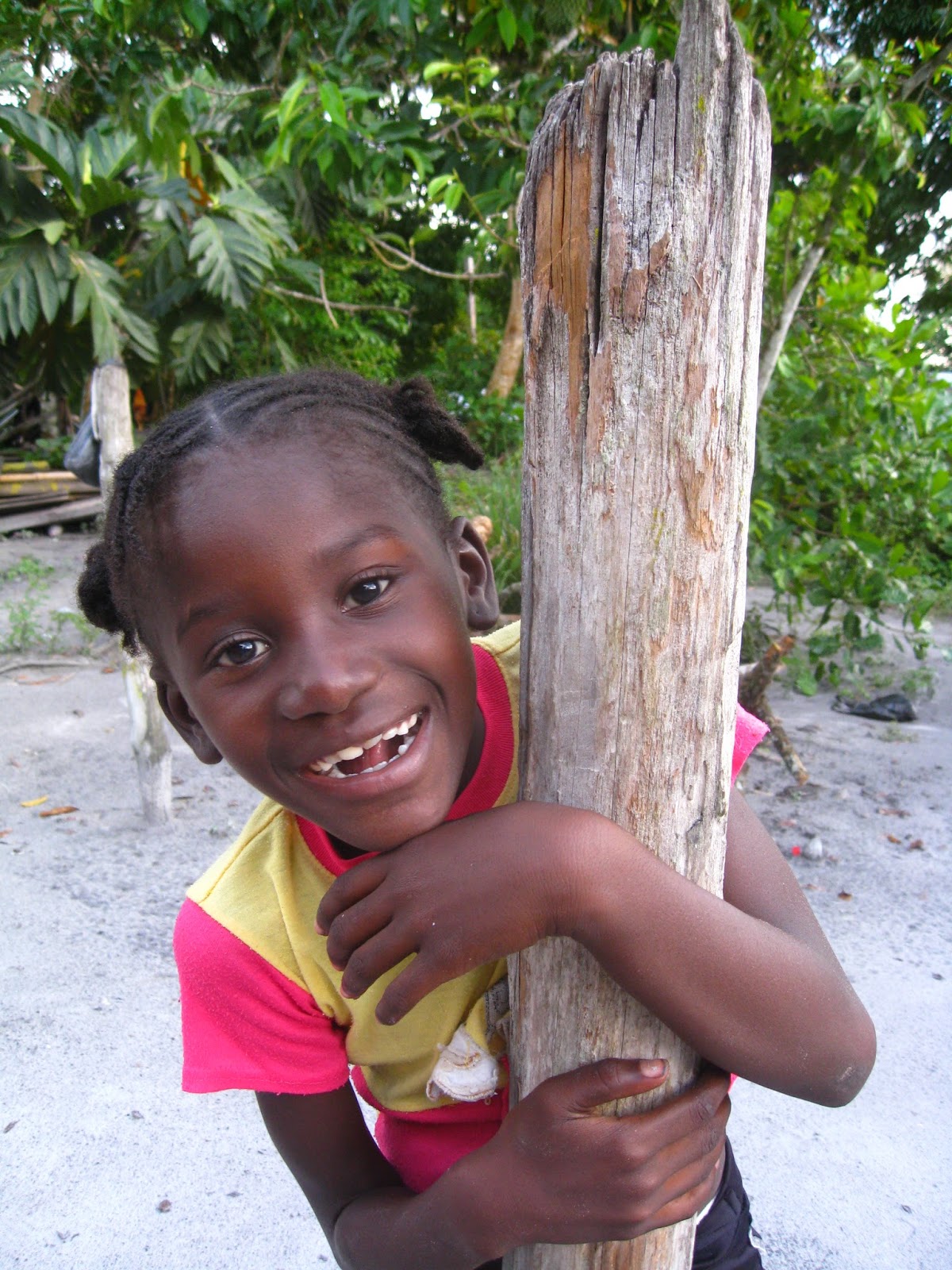
There is hands-down, no question one person I miss above all others from my village, Ovia Ollo, in Suriname. Maiamba. She was my 7-year old neighbor girl, who turned into my best friend. My first day in my village I remember her very clearly. I was standing at the side of my bat shack, with a couple of huge buckets of water trying to wash the never-ending grime off of something-or-another. She bounces up to me and just starts an endless stream of chatter, all while standing either about 2 inches from me, or leaning against me. I was extremely exhausted, having just moved into my shack and having spent the last day from dawn to dusk scrubbing my place and meeting very curious villagers. I immediately thought that this little girl and her endless talking was going to eventually get on my nerves. I was right. She got on my nerves, and right past them. She turned into my basic reason for being in Suriname. I fell very in love with this little elf of a girl. I came to regard her as my best friend, my shadow, and in a way, my child. If I ever have a little girl of my own, I’d love her to be exactly like Maiamba. Maiamba is quirky and unusual, she has some serious spunk, she is smart, and she is very loving. She is wonderful. Unfortunately, her mother was gone most of everyday working in the fields, so she did not get much attention. This little girl was very needy for love and attention. Because of this, I made sure to give her lots of hugs, which I sorely needed also.

Maiamba said to me one day, “Megan, do you notice that wherever you are, there I am?” I responded, “Yes, I actually have noticed that.” She replied, “Yeah, I’m your shadow.” Very true.

Anyway, I think about this little girl a lot, and when I do, fairly often I start to cry a bit because I miss her and know that at 7, it was probably pretty hard for her to understand why I left. She’ll stay with me in my thoughts and heart for the rest of my life. She really made my service possible and for that I’m extremely grateful.

Wednesday, April 17, 2013

Integrating then and now


I think a common fear and anxiety among volunteers who are nearing the end of their service is the question of how they are going to readjust to life back in the United States. So, I’m going to share a few of the experiences I’ve personally had during my re-integration process.

I would say that one of the greater challenges I’ve dealt with in returning to the States has been integrating my Peace Corps life and experiences into my life in the U.S. There were a lot of “challenges” upon first coming home, but this one has stayed with me a bit longer than most. I think it’s important that I integrate my PC life into my “everyday” life and this can be very difficult. I think that this is one of the main reasons I’m re-starting this blog. My life in Wisconsin is about as different as could possibly be imagined from my life in Suriname, so I find it important to honor my experience by bringing it into my current life when and where I can.

One thing I have been surprised about is how rarely people ask me about Peace Corps. I don’t usually bring up that I’m an RPCV with people I just meet. When it naturally comes up, I talk about it, but I’ve learned to avoid that awkward moment where the person I’m talking to clearly has no idea what to say. Fairly often, upon telling someone that I returned this summer from 2 years in the jungles of South America, I get a 5 second blank stare. Then the person invariably says, “that sounds like a blast” and changes the subject. This has been difficult, because I want to talk about my experiences. I feel like I’m denying a part of who I am when I just avoid the subject. I really think that people don’t ask questions because they feel ignorant about not knowing anything about Suriname and hardly anything about Peace Corps. It seems so natural and obvious that most people would know next to nothing about these things. I think this has led me to push for a change in how I act towards others. When I don’t know about something that someone is talking about, I’m working on simply asking questions. I guess I’ve learned to be less afraid of looking foolish or ignorant. Sometimes you can look more foolish by not being curious.

I do feel fortunate because my family and close friends are amazing at asking questions about PC and hearing endless weird stories about my experience. Because my father was a Peace Corps Volunteer, my family has always existed with Peace Corps as a sort of backdrop to our world. We’re all travelers and we all have very curious minds. So, when I do feel like I need to talk about my experience, my family and close friends have been really wonderful at allowing me to open up to them.

Monday, April 15, 2013

Blog Version 1.2

I've recently decided to continue this blog. I think it will be a really great way for me to reflect upon my PC experiences and to share how things unfold as I move forward from Peace Corps. Peace Corps doesn't end when you get on that plane to come home. Honestly, I don't think Peace Corps can ever end for a volunteer. Before leaving for Suriname, I read a lot (I mean A LOT) of PC blogs from countries all over the world. It always seemed like the blog ended when service officially ended. I always found this disappointing because the story really doesn't end there. So, I'm going to try to continue my story.

While I was serving in the Peace Corps, I felt fairly limited in what I could openly share through my blog. There were a lot of factors to balance. I didn't want to use my blog as a venting source. I also wanted to respect other people's privacy since different people have different comfort levels with having an online presence. Thirdly, I had to make sure not to accidentally reveal one of the many ways that the volunteers (including myself) were breaking Peace Corps rules and accidentally get the boot. Lastly, I wanted to make sure to be respectful of Suriname. The country and its people were welcoming me in as one of their own, and I didn't want to repay that kindness with talking harshly about the country. This could be hard, because honestly, Suriname was a hard place to live. It is a beautiful, wonderful country, but it definitely took its toll on me.

I'm going to leave it here for now. I just wanted to officially re-start this whole blogging thing.

Saturday, November 26, 2011


People always told me that the second year was going to fly by, and I just couldn't really picture that happening. Despite it being an amazing experience, time was not exactly moving by quickly. So, it's super strange to realize that I only have about 7 or 8 months left. This second year is truly flying by. Things have been really good since I got back from America. I've been trying to figure out why exactly things have been going so well. I've narrowed it down to a few things. First of all, I'm simply more comfortable in my surroundings. I'm comfortable in my village and have friends there. My language is at a decent spot. There are amazing volunteers here who I trust and adore. Secondly, I actually know what I'm doing here. For the most part, I know what projects I will be working on through the remainder of my time here. (I'll talk about projects later). Not knowing exactly what projects I will be doing is difficult. Thirdly, my head is more present in Suriname since I've come back from the U.S. I'm not constantly thinking about seeing my family and eating amazing food and taking hot showers. I've got my head in the game. I guess I'm trying to say that things are going pretty well. I should just be happy with that and not try to dissect it, but that's difficult to do when I have all the time in the world at site to do nothing but think. Everything gets triple analyzed.

I should probably explain these photos a bit. The first one is from a broko de in my village. It was a funeral party thing for the 8th day after a death. This one was really small because they also celebrated in the city. Usually, people come from all over the place and the village triples in size. This one was just amongst my villagers, which was pretty cool. Also, "broko de" means break the day, which translates into really loud music all night. Everyone stays up all night dancing until the sun rises. Since I'm a grumpy old lady, I can't stay up past 11 in the village. Because this one was a small broko de, they didn't rent out a sound system. The drum band in my village played instead, which I much prefer. I think they're really good. They have 2 really beautiful drums that they made themselves out of wood and dear skin. So, this photo is some kids in my village dancing to the drummers.

The second photo is a woman making kwaka, which is kind of like village style Grapenuts. It's made of cassava. Here is the last step in about a 2 week process.

Let's talk projects. The big project I'm working on is a life skills program for the kids in my village. I've been compiling activities from a variety of life skills materials (thanks Christine for the amazing life skills program you put together for 6th graders) into a year-long syllabus for the women in my village to utilize. With this, they will have activities to do with the kids for a full year. The subjects include communication, relationships, decision-making, HIV/AIDS, and workforce preparedness. With this project I'm writing a grant to get money so that we can get all the materials needed for this project. So, that's the big one I've been working on. All along, I've been doing after-school tutoring for the kids in my village, but I'm just expanding it with this project to cover more than just math and reading and other basics covered in school.

I'm getting pretty excited to see my family soon. I'll be spending Christmas in Tobago with my Dad, stepmom and two brothers. From there, Dad, Maia and I will be heading back to Suriname and they will spend close to two weeks here. I'm so excited to show them my home here and have them see my village, meet my villagers and meet the other volunteers. It's so amazing to be able to share this place with my family. It was so wonderful and important to me when my mom came to visit me last February.

Thursday, August 18, 2011

Back from America


Wow, it's been a super long time since I've written. I just got back yesterday from visiting the U.S. It was such an amazing trip. I got to see my family and friends and so many people I love. Some highlights: a day at the park with my family playing batche (sp?) ball and eating great food, going up to my uncle's cottage for a week, bike rides with my Mom, going to an amazing aquarium in Dallas, and going to magical land in Wisconsin (ok, that's what we called it, it's beautiful place to go cliff diving and swimming). I could really go on and on about eating awesome food, hot showers, the people I love, etc. but I'll stop.

I'm just starting something called World Wise Schools. It's a correspondence set up with a classroom in the U.S., where I write to them about my experiences in Suriname and the students write to me and ask questions and tell me about their lives. I'm really excited about it. I will be working with a class of 7th and 8th graders in Iowa. I just finished my first letter to introduce myself. I think it's the most complete introduction to Suriname I've written, so I'll paste it in here:


Hey there! My name is Megan and I’m a Peace Corps volunteer in Suriname. I’ll use this first letter to tell you guys a bit about myself, Suriname, and Peace Corps. I’m 28 years old and I’m from Fond du Lac, Wisconsin. I graduated with a Bachelor of Arts from the University of Wisconsin-Madison. After that, I worked for about 5 years and then joined the Peace Corps!

Suriname is a small country on the northern coast of South America. It is bordered on the East by French Guiana, on the West by Guyana, on the South by Brazil, and on the North by the Atlantic Ocean. Suriname is roughly the size of Georgia, but with a population of less than 500,000 people! A full half of the population lives in the capital city, Paramaribo. There are small towns and villages scattered along the coast of the country and 90% of the population lives on the coast, which makes up only 10% of the area of the country. The rest of the 90% of the country is made up of dense rain forest. This is where I live. There are small villages, made up of between about 50 people each to sometimes 1000 people, scattered along the rivers of the interior of the country.

To give a bit of history of the country, during the 16 century the Dutch, English and Spanish settled the area of Suriname. A treaty arose between the Dutch and English, giving the Dutch Suriname. The English were given New Amsterdam, which later became New York City. In the 17th century the Dutch started plantations to grow cocoa, cotton, sugar cane and coffee. These plantations used African slaves to run them. It is known that the Dutch in Suriname treated these slaves especially cruelly. Because of this, many of the slaves managed to escape and flee to the interior of the country, into the jungle. They established small villages along the rivers of the country that were deep in the jungle, to avoid being found by the plantation owners. A few centuries later, I live in one of these villages, called Ovia Ollo. The descendents of the escaped slaves are now known as Maroons. There are many different groups of them who speak different languages and have different cultural norms. Two of the biggest groups are the Ndyuka (pronounced Na-dju-ka) and the Saramakaans. The Peace Corps volunteers within the country live mostly with these two groups of people. I live with the Ndyuka, who are also referred to as Aukans.

Suriname is an extremely culturally diverse country. After slavery was abolished in 1863, the Dutch brought in contract labourers from what is now India and Indonesia. Today, the population is made up of 37% Hindustani people (descendents of the Indian contract labourers), 15% Javanese (descendents of the Indonesian contract labourers), 31% Creoles (mixed descendents of African slaves and the Dutch), 4% Amerindians, 10% Maroons, and a small percentage of Chinese, Dutch and Brazilians.

In 1975, Suriname gained its independence from the Netherlands. There was a military coup in 1980, which led to a dictatorship by Desi Bouterse (who was elected president last year), and a bloody civil war.

So, that’s enough history. I thought you should all know a bit about the country before I tell you more about my life and the Peace Corps here. We have about 45 Peace Corps Volunteers in Suriname currently. Most of the volunteers live in the interior, in the jungle. A few live in small towns on the coast and a few also live in the city, working for NGOs. There’s a wide variety of volunteers living in country. We have three married couples, people from all over the U.S., and people from ages 22 to 65 years old.

Now I’ll tell you a bit about my life in my village. Like I said, my village is named Ovia Ollo. About 100 to 150 people live in my village. It takes me about 4 to 6 hours to arrive in my village from the city. I have to take a “taxi” from the city to a town called Moengo. To get a taxi I basically find a car going to Moengo (usually a mini van), and I usually pile myself and my luggage into it along with usually 7 other adults and 1 to 5 children. It’s pretty crammed and uncomfortable. The road to Moengo is not pleasant either. There are huge holes in the road because of all the rain. Luckily, they are building a new road, so every time I travel to my village a little more of the road is finished and it’s a little bit more pleasant! From Moengo I hop on a bus going to my village. It costs me about $0.90 USD and takes about 45 minutes. I usually have to hold all of my luggage in my lap and it’s rather uncomfortable also.

Ovia Ollo is on a small river called the Patamaka. I’m the only volunteer living on this river. Life in the village revolves around the river. Everyone bathes, washes clothes and dishes, and catches fish in the river. They also use small canoes that they have carved out of large trees to get to their gardens and to go hunting. Since my river is so small, people don’t have motors on these canoes, they just paddle them with small wooden paddles. Almost every day the women go to their gardens. This is the main source of their food. They grow lots of cassava, pumpkin, bitter melon (which I DON’T like), and different leafy vegetables. The men frequently go out hunting in the jungle. They wear big black rubber boots, long pants and bring a shotgun and a machete. They come back with so many different kinds of animals. Unfortunately, many of the exotic animals I’ve seen have been hunted and killed. That makes me pretty sad, but that’s just the way of life here. They hunt a lot of wild boar, monkey, agouti (which is kind of a mix between a large rodent and a rabbit), sloth, and a variety of birds. I have seen a lot of different monkeys, snakes, and birds in the wild. The birds are beautiful here. There are tons of toucans, parrots, macaws, and all sorts of other beautiful birds.

Suriname is only about 4 degrees north of the equator, so it gets really really hot. There are 4 seasons in Suriname. The large rainy season, the large dry season (which is starting now), the small rainy season, and the small dry season. So, basically, the only thing that changes is the amount of rain. During the dry season it gets extremely hot, but there is a bit more of a breeze. Someone once told me that you can tell it’s the dry season if you lie on the cement floor and do absolutely nothing and sweat still streams down your face. It’s true. Yuck.

I live in a small wooden house with a zinc roof. The zinc roof makes it extremely hot in there. I try not to spend too much time in my house. I have some electricity. I have one electrical plug to charge things, and two lightbulbs in my house. Unfortunately, we only have electricity occasionally. We have a generator for the village and it is turned on from 6:00 p.m. until 11:00 p.m. However, many times there is no oil for the generator or the generator gets broken, so we go completely without power. That can be fun, for a little while. From January to May of this year I didn’t have any power. The stars are absolutely amazing when there is no electricity! I am lucky enough to actually have a flush toilet and a shower, which is in our small clinic right near my house. Most volunteers have a latrine and a small wash house where they have to use a bucket to bathe themselves or go down to the river. For drinking and cooking water, I have two 450 gallon tanks that collect rainwater from my roof. I then bring this water into my house and use a filter to make it cleaner.

Well, this is getting extremely long, so I’ll end it here for now. I’d like to learn a little about you guys too. Tell me about yourselves! And please, ask me any questions that you have!


Oh, and I'm posting a picture from Camp Glow (which was back in late April). It was a camp for teenage girls in my area that we held. It went super well. We had sessions about HIV/AIDS, teen pregnancy, we had a career day, and lots of fun sports and arts and crafts. It was pretty great.